what is federated learning?
Federated Learning (FL) is a machine learning approach that trains an algorithm across multiple decentralized edge devices or servers holding local data samples, without exchanging their data. This contrasts with traditional centralized machine learning techniques where all client data is uploaded to a single server. In FL, only the model updates (e.g., gradient information) are sent to a central server, not the raw data itself.
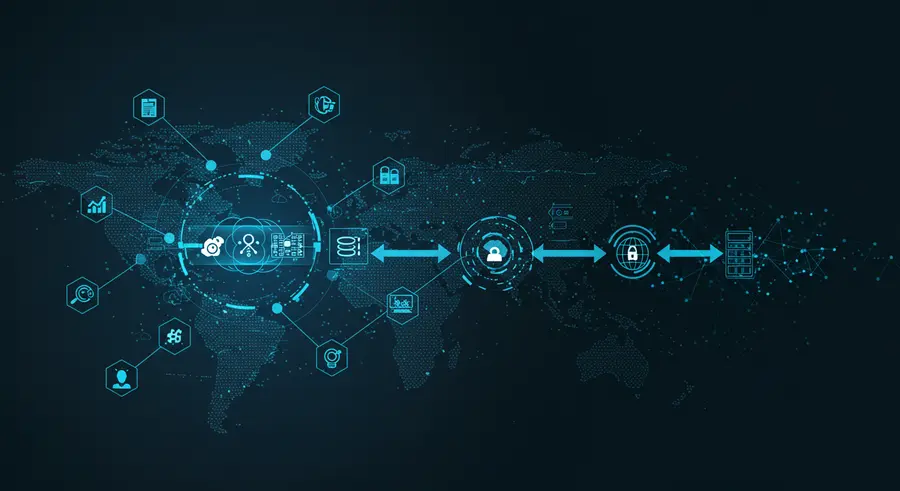
how does it work? the federated cycle
The core concept of Federated Learning revolves around a cyclic process:
- Initialization: A global model is initialized on a central server.
- Distribution: This global model is sent to selected client devices (e.g., mobile phones, hospitals, banks).
- Local Training: Each client trains the model on its own local, private dataset. Critically, this data never leaves the device.
- Update Upload: After local training, clients send their model updates (not the data) back to the central server.
- Aggregation: The central server aggregates these updates from all participating clients to improve the global model. This aggregation can involve various techniques, such as federated averaging.
- Iteration: The improved global model is then sent back to the clients, and the cycle repeats until the model converges or a set number of rounds are completed.
This iterative process allows the central model to learn from a diverse and distributed dataset without ever directly accessing the sensitive individual data points.
key benefits of federated learning
- Enhanced Data Privacy: This is the primary advantage. Raw data remains on the local device, significantly reducing privacy risks and aiding compliance with strict data protection regulations like GDPR and CCPA.
- Reduced Communication Costs: Sending model updates (often compressed) is much more efficient than transmitting vast amounts of raw data, especially for edge devices.
- Access to More Data: FL enables models to be trained on data that would otherwise be inaccessible due to privacy concerns, regulatory hurdles, or sheer volume. This is crucial for sectors like healthcare and finance.
- Improved Model Robustness: Training on diverse, real-world data from various sources can lead to more robust and generalized models.
- Edge Intelligence: FL facilitates the development of AI models that can operate on edge devices, reducing latency and reliance on continuous cloud connectivity.
challenges and considerations
While powerful, Federated Learning presents its own set of challenges:
- Non-IID Data: Data across clients is often non-Independent and Identically Distributed (Non-IID), which can affect model convergence and performance.
- System Heterogeneity: Clients can have varying computational power, connectivity, and battery life, making model distribution and aggregation complex.
- Security Threats: While protecting raw data, FL is still vulnerable to attacks like model inversion attacks or poisoning, where malicious clients try to infer sensitive data from model updates or corrupt the global model.
- Communication Overhead: Even with reduced communication, frequent exchanges of model updates can still be substantial for large models or many clients.
- Fairness and Bias: Ensuring that the aggregated model performs fairly across all client populations, especially if some groups are underrepresented, is an ongoing research area.
applications of federated learning
Federated Learning is gaining traction across numerous industries:
- Mobile Keyboards: Predictive text and next-word prediction models are often trained using FL on users' typing data, enhancing personalization without sending private conversations to the cloud.
- Healthcare: Hospitals can collaboratively train models for disease prediction or drug discovery using patient data, without ever sharing individual patient records.
- Financial Services: Banks can detect fraudulent transactions by sharing model updates on suspicious patterns, without exposing sensitive customer transaction details. For instance, autonomous AI investment platforms could leverage federated learning to refine their predictive models based on anonymized, distributed financial data from various institutions, offering a more robust understanding of market dynamics while preserving the confidentiality of individual investment strategies.
- IoT and Edge Devices: Smart home devices, industrial sensors, and autonomous vehicles can train AI models locally and contribute to a global model, improving their functionality without continuous data uploads.
- Recommendation Systems: Personalization algorithms can be improved by learning from user interactions on local devices, enhancing recommendations while respecting user privacy.
Federated Learning stands as a pivotal technology in the quest for AI innovation that respects and upholds privacy. By decentralizing the data, it empowers collaborative intelligence without sacrificing the security of sensitive information.